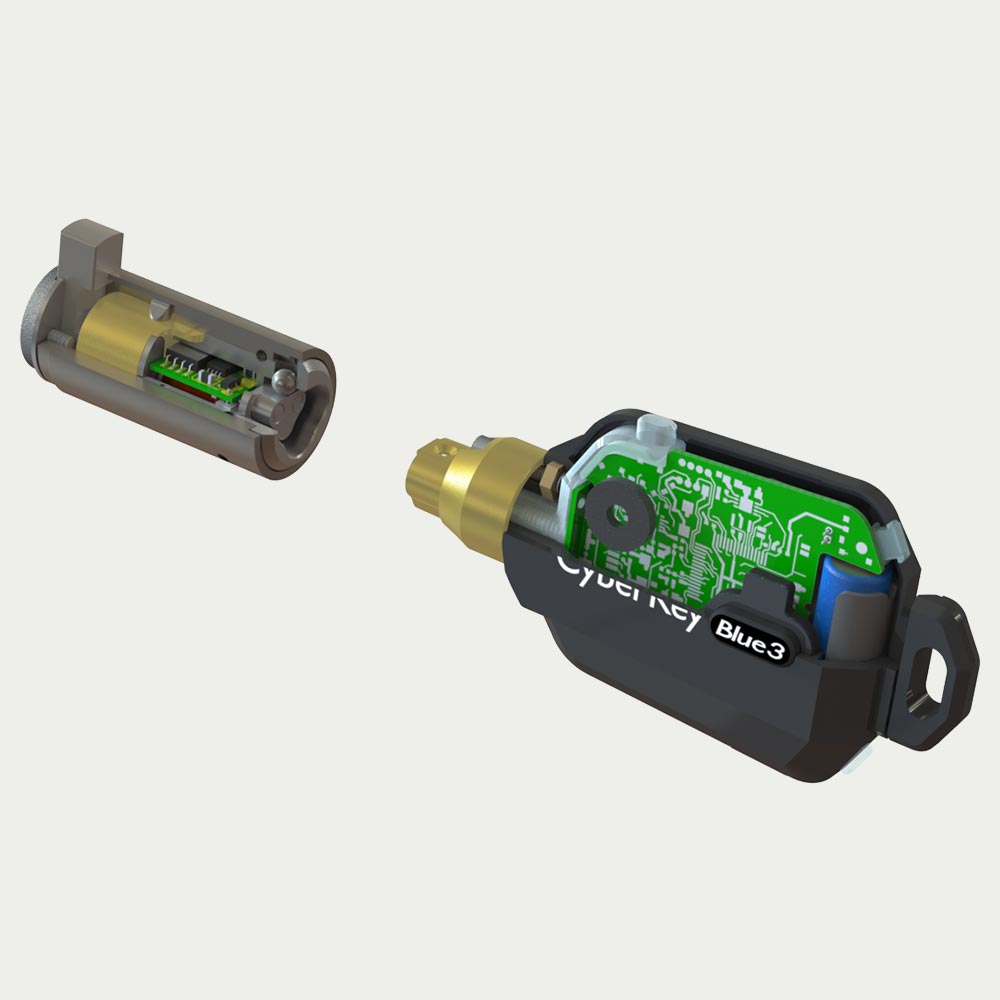
Install without pulling machines out of service
Most cylinder swaps take as little as 30 seconds per machine. The tougher formats run 10 to 15 minutes. Nothing is drilled, nothing is wired, and the machine goes straight back into service.
What the audit trail actually shows
Every time a key and a lock make contact the event is recorded with a date and time stamp: which key, which machine, when. Attempts by a key that does not have permission are recorded in that key’s own audit trail. When a machine comes up short you are reading a list of names and timestamps instead of guessing.
Routes, service areas, and product types
Locks and people carry tags, and access assigns itself from those tags. Tag machines by route, tag drivers by the routes they run, and a new hire is provisioned the day they start. A machine can carry more than one tag, so the same lock belongs to Route 4 for the driver and to the Northeast service area for your technicians. Operators often add a third tag for what the machine dispenses, so reports can be pulled by snack, cold beverage, hot beverage, or coin.
Keys that expire on their own
Rolling expiration keeps a key alive only as long as the holder keeps docking it. Set it to one day and the key stops working at midnight unless it is updated. A driver who quits on Friday has a dead key by Saturday whether or not anyone remembered to collect it. Keys can also be disabled outright, and a disabled key is always recorded by the lock.
Need real time instead? Bluetooth and NFC CyberKeys let a driver pull updated permissions from a phone in the field, so you can grant or revoke access to a machine while the truck is still on the route.
Do you actually need an electric latch system?
Usually not. Most operators searching for a vending electric latch or electronic latching system are trying to solve key control, not door hardware. Replacing latch assemblies across a fleet is expensive and rarely necessary. Swapping the cylinder inside the handle you already have delivers the same control for a fraction of the cost, and it works across machines from different manufacturers standing side by side in the same account.
Hosted on secure AWS, or on your own server
CyberAudit Web runs in a browser either way, and the locks, keys, and audit trail are identical between the two. Most operators run the hosted version, which sits on secure AWS infrastructure. No server to buy, nothing to patch, and access from any laptop or phone. Clients with stricter requirements install the same software on a server they own, where it can sit on a private network with no exposure to the internet. Public sector agencies, utilities, and contractors whose security policy rules out hosted platforms usually take that route. Tell us which side of that line you are on and we will scope it accordingly.
It does not stop at the machine
The same key opens the rest of the operation: warehouse gates, cash rooms, service vehicles, storage cages, commissary coolers, and micro market fixtures. One credential, one system, one report. If you also run card readers on your building doors, those can be managed from the same platform rather than a second system nobody logs into.
Common questions from vending operators
Do I have to replace my vending machines?
No. The electronic cylinder is built to the exact dimensions of the mechanical cylinder it replaces, so it goes into the machine you already own. Nothing about the machine changes except what is inside the lock.
Will it fit the locks I already have?
In almost every case, yes. There are over 450 cylinder designs across the CyberLock line, covering the most common formats in North America including the T-handle and plug locks used on vending equipment. Send us a photo of your handle and we will confirm the format before you buy anything.
Does the machine need power, wiring, or wifi?
No. There is no wiring and no battery at the lock. Power comes from the battery in the CyberKey when the key touches the lock. That is what makes it workable on machines sitting in a lobby, a break room, or a remote site with nothing to plug into.
What happens when a driver quits or loses a key?
You disable the key in the software and it stops opening locks. With a rolling expiration rule you do not even have to remember: the key expires on its own unless the holder docks it. No locks get rekeyed and no machines get visited.
Can I manage it remotely?
Yes. On the hosted version you can add a driver, change a route, or pull an audit report from anywhere with a browser, and reports can be emailed to you on a schedule so you are not logging in to check. If your security policy will not allow a hosted system, the same software installs on a server you own and your team reaches it over your own network.
Can I start with one route instead of the whole fleet?
Yes, and that is how most operators start. Run it on a single route or a single problem account, look at the audit trail after a month, then scale. The system is the same whether it is 20 locks or 20,000, so nothing gets thrown away when you expand.
Can I prove a driver serviced a machine?
Yes. Contact between the key and the lock is recorded with a date and time stamp, which proves the driver was at that machine at that time. Operators use the same records for route verification and for service level disputes with accounts.
Can we run the software on our own servers instead of the cloud?
Yes. CyberAudit Web is offered hosted on secure AWS infrastructure, or installed on a server you own and control. On premises it can sit on a private network with no exposure to the internet, which is what most public sector and high security clients require. The hardware, the keys, and the audit trail work exactly the same either way.