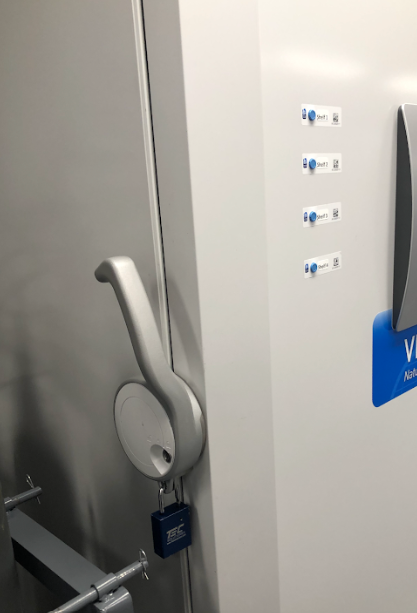
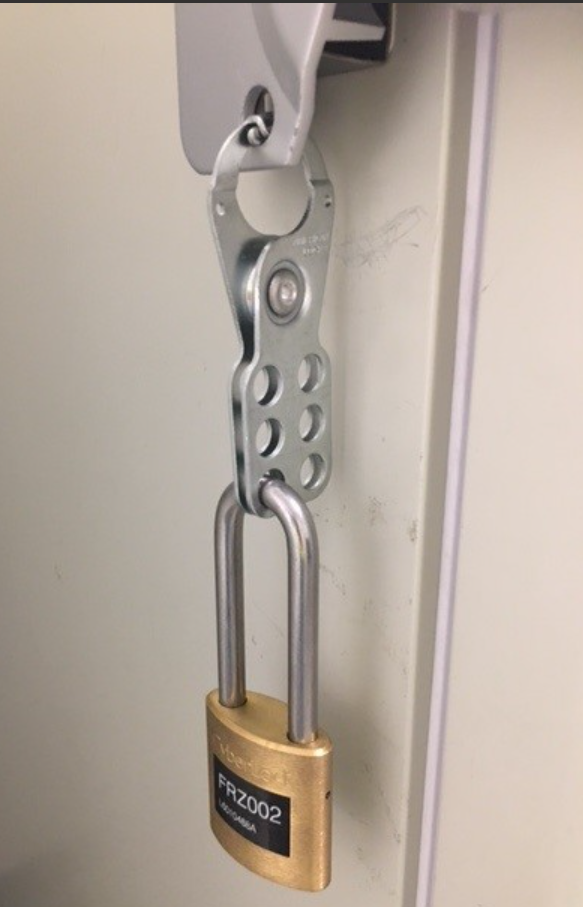
The two person rule, enforced by the lock itself
This is the capability most facilities do not know exists. A CyberLock cylinder can be configured so that two or more keys must be presented in succession before it opens. The lock can additionally require that those keys belong to different schedules, so one person holding two keys cannot satisfy it. A supervisor and a technician have to be standing there together.
The same cylinder can carry an open delay, holding the lock shut for up to 17 minutes after the first key touches it. For a narcotics cabinet or a high value reagent store, that turns a quiet after hours theft into something that takes planning and leaves a record either way.
One limitation, stated plainly. Multi-key access and open delay are features of the standard CyberLock cylinders. They are not supported on CyberLock Blue, the Bluetooth line. If dual custody matters to you, we will spec the standard cylinders for those openings and can still use Blue elsewhere in the building.
Every opening behind the card reader
CyberLock cylinders install in interior and exterior doors, padlocks, containers and cabinets, across more than 450 cylinder designs. In a working lab that usually means the corridor doors, the reagent and solvent cabinets, sample and specimen freezers, the gas cylinder cage, equipment and instrument rooms, records storage, and the loading dock. None of it needs to be wired, which is why it works in a building where pulling cable through a wall means a shutdown and a permit.
Keys that expire, and keys that come back
Rolling expiration keeps a key alive only as long as its holder keeps docking it. Set it to one day and a key that is not updated stops working at midnight. A postdoc who finishes on Friday has a dead key by Saturday whether or not anyone collected it.
For tighter control, a CyberKey Vault holds the keys in a locked cabinet and the holder returns the key at the end of a shift rather than taking it home. A PIN entered at the communicator validates the person before their key is updated. If a key is lost, you disable it, and locks can be programmed to refuse that key specifically.
When a lock needs to be re-keyed, it is done in software by changing the access codes. Nobody visits the building with a drill.
Vendors, contractors and after hours access
Service engineers, calibration vendors and cleaning crews get a key that works only in the rooms they need, only on the days and hours they are expected, and only until the job is finished. Tag people by role and tag locks by area, and a new hire is provisioned correctly on their first day without anyone rebuilding a permission list by hand.
Narcotics and scheduled drug storage
If controlled substances are the core of the problem rather than one cabinet inside a larger lab, look at NarcLock, which is built specifically for scheduled drug storage. The two systems are managed the same way and the audit trails behave the same way.
Hosted on secure AWS, or on your own server
CyberAudit Web runs in a browser either way, and the locks, keys and audit trail are identical between the two. Most facilities run the hosted version, which sits on secure AWS infrastructure. No server to buy, nothing to patch, and access from any laptop or phone. Research institutions and contractors whose security policy will not allow a hosted platform install the same software on a server they own, where it can sit on a private network with no exposure to the internet.
Common questions from lab and facility managers
Do I have to replace my lab doors or cabinets?
No. The electronic cylinder is built to the exact dimensions of the mechanical cylinder it replaces, so it drops into the door, cabinet or padlock you already have. The hardware keeps working the way it always did.
Can I require two people to open a controlled substance cabinet?
Yes. Standard CyberLock cylinders can be set so two or more keys must be presented in succession before the lock opens, and can require those keys to belong to different schedules so one person carrying two keys will not satisfy it. Note this is not available on the CyberLock Blue line.
Does it need power, wiring or wifi at the cabinet?
No. There is no wiring and no battery at the lock. Power comes from the battery in the CyberKey when the key makes contact. That is what makes it workable on a freezer in the middle of a room or a cage in a basement.
What happens when a researcher leaves or loses a key?
You disable the key in software and it stops opening locks. With a rolling expiration rule it expires on its own unless the holder keeps docking it. Locks can also be programmed to refuse a specific lost key. No cylinder gets pulled and no cabinet gets rekeyed.
Can I prove who opened a freezer at two in the morning?
Yes. Contact between the key and the lock is recorded with a date and time stamp, so you have the person, the opening and the time. That record is what your compliance team needs when they have to reconstruct who had access to what.
Can I give a calibration vendor access for one visit?
Yes. A key can be limited to specific locks, specific days and hours, and an expiration date. When the window closes the key stops working without anyone chasing the vendor down.
Can we run the software on our own servers instead of the cloud?
Yes. CyberAudit Web is offered hosted on secure AWS infrastructure, or installed on a server you own and control. On premises it can sit on a private network with no exposure to the internet. The hardware and the audit trail work the same either way.
Can I start with one room instead of the whole building?
Yes, and that is how most labs start. Fit the openings that actually keep you up at night, look at the audit trail after a month, then expand. The system is the same at 20 locks or 20,000.