






Electronic Lock Security: How Safe Are Electronic Locks, Really?
Updated June 2026 by the TEC Solutions team.
Electronic lock security is strong when the system encrypts the link between key and lock, keeps an audit trail, and lets you revoke a lost key in software. Done right, an electronic lock is harder to defeat than a mechanical key, which can be bumped, picked, or copied at a hardware store. The real questions are encryption, audit trails, and what happens when a key goes missing. This guide answers each one in plain terms.
Table of contents
- Electronic lock security vs. mechanical keys: which is safer?
- Can electronic locks be hacked?
- What happens if an electronic key is lost or stolen?
- Do electronic locks fail when the power or batteries die?
- Is electronic lock security strong enough for compliance?
- What makes electronic lock security actually work?
- Frequently asked questions
Electronic lock security vs. mechanical keys: which is safer?
Electronic locks are safer than mechanical keys for most commercial sites. A mechanical key can be copied at a hardware store, bumped open in seconds, or picked, and it leaves no record of who went where. An electronic key uses encryption, records every use, and stops working the moment you revoke it.
Mechanical pin-tumbler locks have two problems that no amount of hardware quality fixes. The first is duplication. Anyone with the key, or a few minutes alone with it, can cut a copy. The second is rekeying cost. When a key goes missing on a master system, you pay a locksmith to re-pin every affected lock. Commercial rekeys run $50 to $150 per lock, and a lost master key on a 50-door system can cost $5,000 to $7,500 in labor (Fixr.com, 2025).
Lock bumping makes the picture worse. A bump key is cheap, easy to use, and non-destructive, so a bumped lock often shows no sign of forced entry. Lock bumping has been a documented attack on standard pin-tumbler locks for two decades.
| Factor | Mechanical key | Electronic lock (CyberLock) |
|---|---|---|
| Encryption | None | AES-256 between key and lock in Generation 2 mode |
| Audit trail | None | Recorded on both the key and the lock |
| Lost-key response | Re-pin every lock | Revoke in software in minutes |
| Rekeying cost | $50 to $150 per lock | No rekeying, ever |
| Wiring at the door | None | None (cylinder is offline) |
| Duplication | Copied at a hardware store | Keys cannot be duplicated |
| Schedules and expiration | No | Per-user schedules and key expiration |
Can electronic locks be hacked?
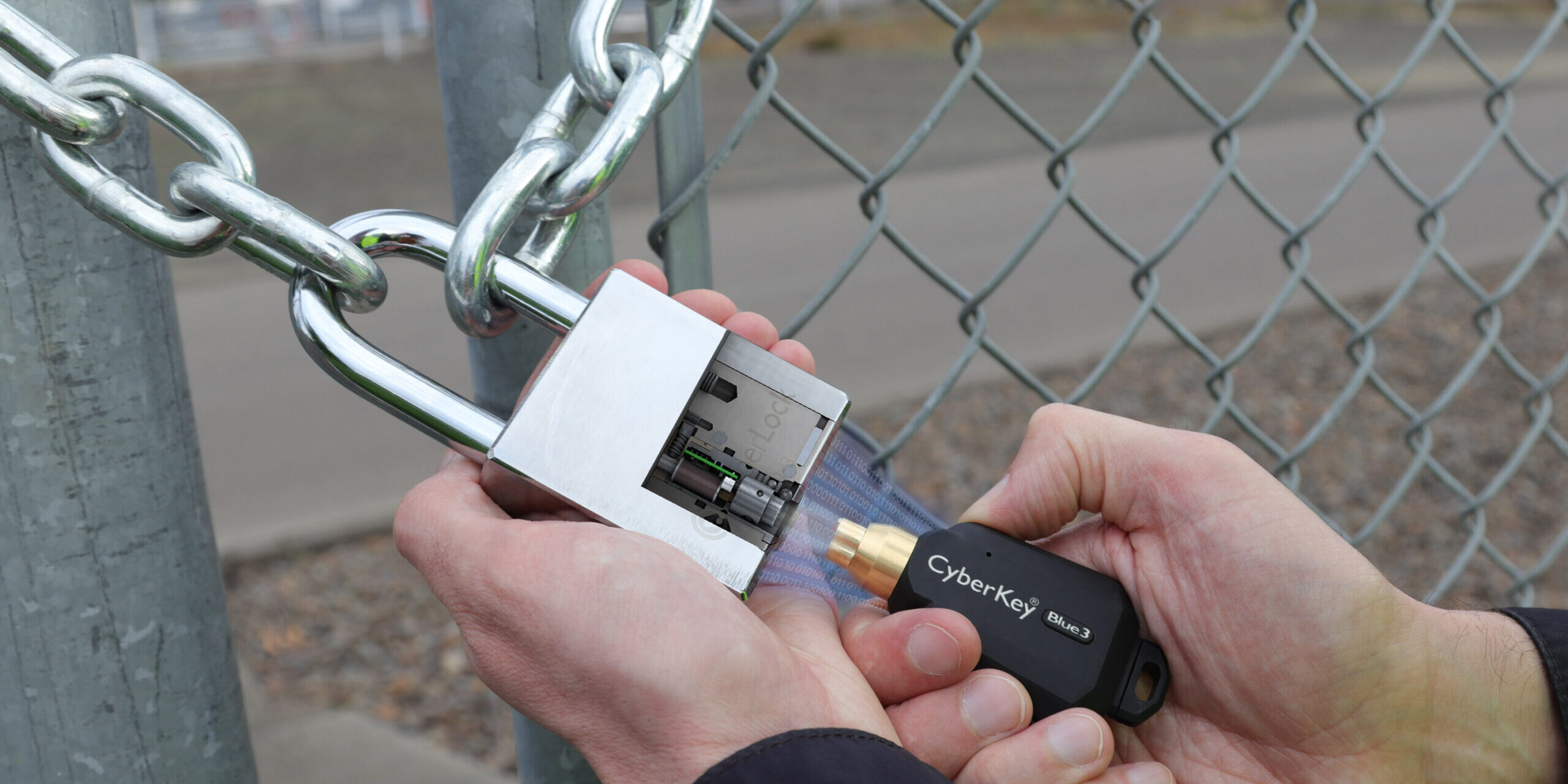
No. A properly built electronic lock can’t be hacked the way people picture it, because there is nothing at the door to hack. A CyberLock cylinder is offline. It has no motor, no power, and no network or radio sitting at the door waiting for a signal. There is no open port and nothing to scan from across the parking lot.
The cylinder wakes up only when an authorized key touches it. The key and lock trade encrypted IDs, the lock checks its access list and its lost-key list, then it goes back to sleep. On Generation 2 locks that exchange uses AES-256, the same encryption standard the U.S. government adopted in NIST FIPS 197. There is no known practical way to break it.
This is where consumer smart locks and commercial electronic locks part ways. A smart lock that sits on Wi-Fi or Bluetooth gives an attacker something to reach from a phone or a laptop. An offline cylinder gives them nothing. Keys carry the same protection: each CyberKey has a unique ID and encrypted access codes and cannot be cloned, so a copied or counterfeit key will not open anything.
What happens if an electronic key is lost or stolen?
If an electronic key is lost, you revoke it in software and it stops at the next lock it touches. No locksmith, no re-pinning. The lock also carries a lost-key list, so even an offline cylinder rejects a revoked key on contact.
Compare that to the mechanical version of the same event. A lost master key can cost $5,000 to $7,500 in locksmith labor to re-pin a 50-door system (Fixr.com, 2025), and you are exposed the entire time the locksmith is working. With electronic keys, you can also set keys to expire on a schedule, so a key that walks off site is dead within hours whether you catch it or not. Records of the loss and the revocation live in the audit trail, which you can read in TEC’s knowledgebase-documented software.
Do electronic locks fail when the power or batteries die?
The standard lock cylinder has no battery and no wiring, so a power outage at the building does nothing to it. The key carries the power and energizes the cylinder at the moment of use. A standard CR2 lithium key battery yields 2,000 to 5,000 openings, and rechargeable keys give 500-plus openings per charge.
This is the part most people get backwards. Because the cylinder is offline, there is no controller, no power supply, and no network run that can fail at the door. Keyless models built for the same system carry their own long-life batteries, with five years on the NFC locks and two years on the Bluetooth locks, both field-replaceable. For sites that cannot touch the cloud at all, the management software runs on-premises in an air-gapped network, so an internet outage never locks you out of your own building.
Is electronic lock security strong enough for compliance?
Yes. Electronic lock security supports compliance because every lock and key records who opened what, when, and whether access was granted or denied. That audit trail is exactly what auditors ask for, and a mechanical key cannot produce it.
The record sits on both the key and the cylinder and logs authorized openings and denied attempts alike. That maps directly to the access-control language in standards TEC’s customers work under: NERC CIP-006-6 for electric utilities, AWIA Section 2013 for water systems, and DEA 21 CFR 1301.71 for controlled-substance storage. When an auditor asks who had access to a cabinet last quarter, you export the log instead of guessing.
What makes electronic lock security actually work?
Strong electronic lock security comes down to a short list: encryption on the key-to-lock link, offline cylinders with no network at the door, an audit trail on both the key and the lock, and instant revocation when a key goes missing. Add key expiration and per-user schedules and you control not just who has a key, but when and where it works.
Two practical features decide whether any of that reaches your doors. The first is retrofit. CyberLock cylinders drop into existing padlocks, cam locks, deadbolts, and mortise hardware across more than 400 designs, so you upgrade without replacing doors. The second is integration. The software ties into Active Directory and LDAP, so access follows the same accounts your IT team already manages. You can see the full hardware range on the CyberLock product page, or talk to TEC about your specific doors.
Frequently asked questions
Are electronic locks more secure than traditional keys?
For most commercial sites, yes. Electronic locks add strong encryption, AES-256 on Generation 2 hardware, plus an audit trail, and instant key revocation that mechanical keys cannot match. A mechanical key can be copied, bumped, or picked and leaves no record, while a lost master key can cost $5,000 to $7,500 to re-pin a 50-door system (Fixr.com, 2025).
Can electronic locks be hacked?
No. A properly built electronic lock can’t be hacked the way people picture it, because there is nothing at the door to hack. The cylinder is offline, with no motor, no power, and no network connection. On Generation 2 hardware its key-to-lock link uses AES-256, the same encryption standard the U.S. government adopted in NIST FIPS 197, with no known practical way to break it.
What happens if I lose an electronic key?
You revoke the key in software and it stops at the next lock it touches, with no locksmith and no rekeying. The cylinder carries a lost-key list, so even offline doors reject the revoked key. You can also set keys to expire automatically, so a missing key dies within hours.
Do electronic locks work without power or wiring?
Yes. The standard cylinder has no battery and no wiring, so a building power outage does not affect it. The key carries the power and energizes the lock on contact. A CR2 lithium key battery yields 2,000 to 5,000 openings, and rechargeable keys give 500-plus openings per charge.
Is electronic lock security good enough for regulatory compliance?
Yes. Every lock and key records who opened what, when, and whether access was granted or denied. That audit trail supports access-control requirements under NERC CIP-006-6, AWIA Section 2013, and DEA 21 CFR 1301.71. You export the log instead of reconstructing access by memory.
How much do electronic locks cost compared to wired access control?
CyberLock runs about one-tenth the cost of traditional hardwired access control, per TEC’s product page, because there is no wiring, no controller, and no power supply at the door. The cylinders retrofit existing hardware, which removes most of the install labor that drives up wired systems.
One system for every door, from one provider
TEC Solutions runs the whole thing in one place: cylinders, keys, communicators, and the management software, plus install and support. One system covers your doors, cabinets, gates, and remote sites, and it ties into the Active Directory accounts your IT team already manages. You are not stitching together hardware from one vendor and software from another. We have fitted electronic lock security to utilities, water districts, healthcare, and government sites for 20-plus years. Contact TEC Solutions to map your access points to the right hardware.